
Holiday Fun with Real-Life Numbers
The holiday season is filled with magic—twinkling lights, cozy traditions, and the irresistible smell of gingerbread baking in the oven. But what if all that holiday cheer could also become one of the most meaningful learning experiences your child has all year?
Welcome to Gingerbread Math at Home for Homeschooling Families, where cookies, measuring cups, and mixing bowls become powerful teaching tools—and math finally makes sense.
If your child groans at worksheets or shuts down when numbers appear, you’re not alone. Many kids struggle with math because it often feels abstract and disconnected from real life. The holidays is the perfect time to make math more interactive instead of coming from a textbook. With gingerbread as the centerpiece, you can naturally teach addition, subtraction, fractions, measurement, multiplication, data collection, and even basic algebraic thinking—all while creating memories your family will cherish long after the cookies are gone.
Why Gingerbread Math Works So Well
We all love sweets around the holidays, but why does gingerbread with math activities?
Math Feels Meaningful and Real
When children measure flour, count cookies, or double a recipe, they see math working in real time. Numbers suddenly have a purpose. Math answers a question they care about: Will this recipe work?
Multi-Sensory Learning Improves Retention
Gingerbread math engages:
- Hands (measuring, pouring, mixing)
- Eyes (reading recipes, watching changes)
- Ears (discussing steps aloud)
- Nose and taste buds (because… gingerbread)
This kind of learning is powerful, especially for visual and kinesthetic learners.
Low Pressure, High Engagement
There’s no test, no grade, and no fear of failure. Mistakes simply mean learning opportunities—like discovering why too much flour makes dough crumbly.
Adding and Subtracting While Baking
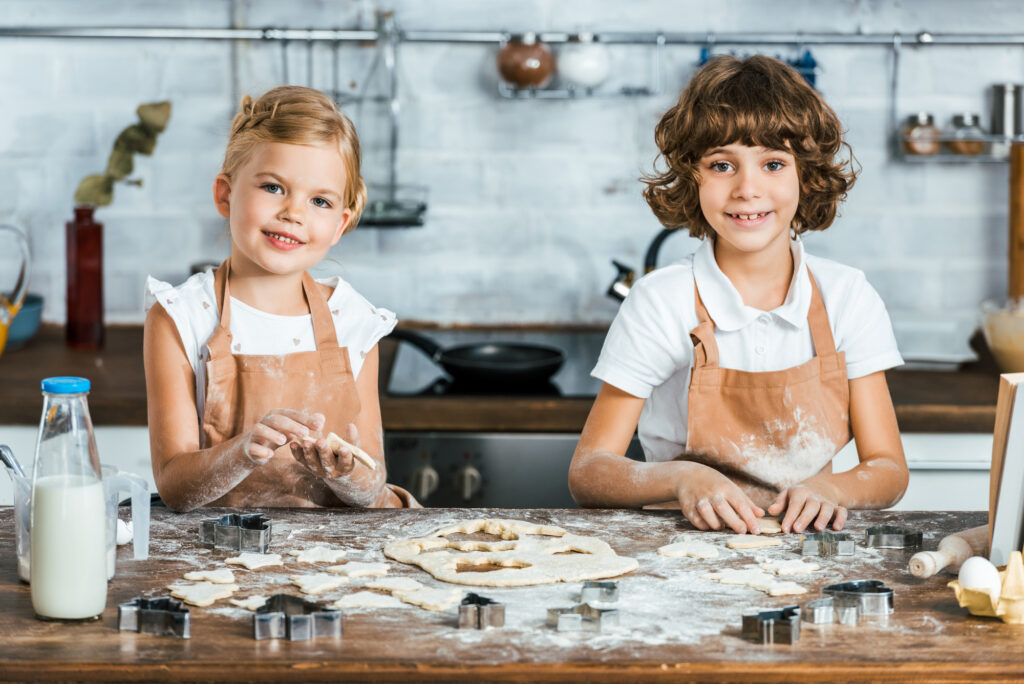
One of the easiest ways to introduce math during gingerbread baking is through basic addition and subtraction.
Counting Ingredients
Start before baking even begins.
Ask questions like:
- How many ingredients do we need?
- How many do we already have?
- How many more do we need to buy?
This simple activity reinforces counting, comparison, and subtraction in a real-world context.
Adding Ingredients Together
While baking:
- “We’ve added 1 cup of sugar and 1 cup of flour. How many cups total?”
- “If the recipe calls for 3 eggs and we’ve added 1 so far, how many are left?”
Children quickly realize that math helps them keep the recipe on track.
Subtracting with Cookies
Once the cookies are baked, subtraction becomes deliciously fun.
Try:
- “We baked 24 cookies. If we eat 3, how many are left?”
- “If we give 6 cookies to a neighbor, how many remain?”
These concrete experiences make abstract subtraction problems far more understandable.
Measuring: The Foundation of Gingerbread Math
Measurement is at the heart of baking—and one of the most valuable math skills children can learn at home.
Understanding Units of Measure
- Cups
- Tablespoons
- Teaspoons
- Fractions of a cup (½, ¼, ⅓)
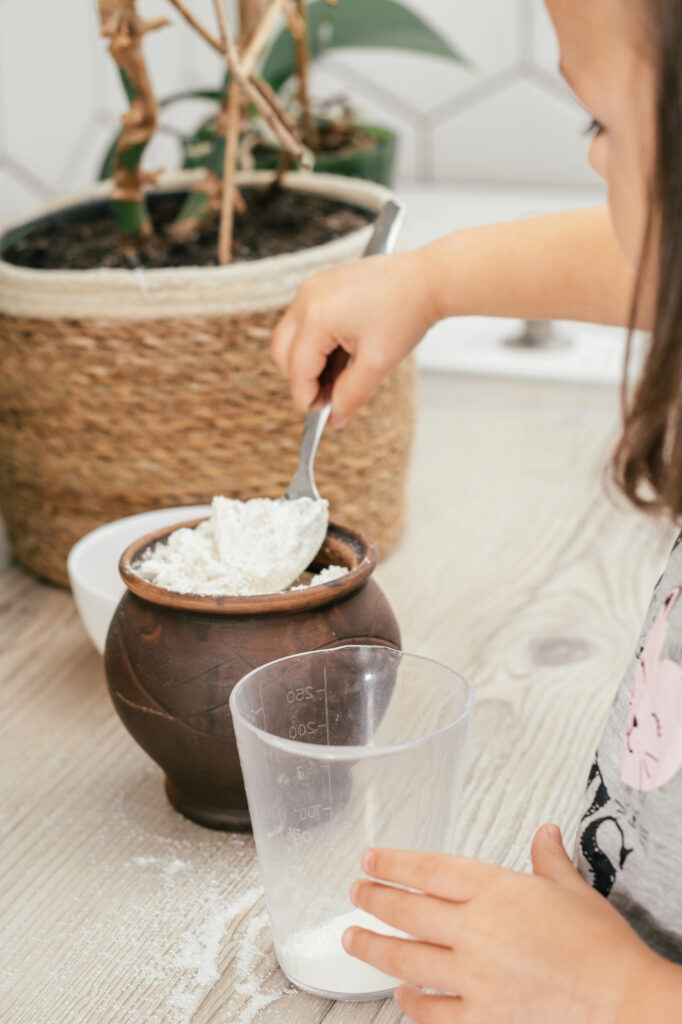
Let your child physically scoop, level, and pour. Talk about:
- Which measurement is bigger?
- How many teaspoons make one tablespoon?
- Why accuracy matters
Estimation Skills
Before measuring, ask:
- “Do you think this bowl will hold all the flour?”
- “Which cup looks closer to one cup?”
Estimation builds number sense and confidence—two skills many struggling math students lack.
Printable Measurement Charts
To increase engagement, include:
- A measurement conversion chart
- A baking tools reference sheet
- Visual guides showing cup and spoon sizes
These printable resources help children connect visual information with numerical values.
Doubling Recipes: Math That Feels Grown-Up
Doubling a gingerbread recipe is where math truly comes alive.
Introducing Multiplication Naturally
Explain:
- “Doubling means we need twice as much of everything.”
Work through the recipe together:
- 1 cup becomes 2 cups
- ½ cup becomes 1 cup
- 2 teaspoons become 4 teaspoons
Without realizing it, children practice multiplication, fractions, and logical thinking.
Advanced Thinking for Older Kids
For older children:
- Ask them to double only part of the recipe
- Have them predict what will happen if one ingredient isn’t doubled
- Introduce the idea of ratios and balance
This type of thinking lays the groundwork for pre-algebra and problem-solving skills.
Gingerbread Fractions: Sweet, Sticky, and Memorable
Fractions can be intimidating (trust me, I know)—but gingerbread cookies make them tangible and fun.
Cutting Cookies into Fractions
Once cookies are baked:
- Break one cookie into halves
- Cut another into fourths
- Compare sizes visually
Ask questions like:
- Which piece is bigger?
- How many fourths make a whole?
- Is two halves the same as one whole cookie?
Decorating Fraction Sections
Use icing to divide cookies into fraction sections:
- Color ½ one color and ½ another
- Decorate ¼ sections differently
This visual reinforcement helps fractions finally click.
Cookie Graphing: Introducing Data and Analysis
Once the baking is done, it’s time to collect data.
Sorting and Categorizing Cookies
Have children sort cookies by:
- Shape
- Size
- Decorations
- Flavor variations
Sorting builds classification skills and prepares children for graphing.
Creating Cookie Graphs
Turn the data into graphs:
- Bar graphs showing favorite cookies
- Tally charts counting decorations
- Pictographs using cookie drawings
Ask analytical questions:
- Which category has the most?
- Which has the least?
- How many more gingerbread men than stars?
This introduces early statistics and critical thinking—without a worksheet in sight.
Creating Holiday Memories That Matter
At the end of the day, gingerbread math is about more than academics.
It’s about:
- Sitting together at the table
- Laughing when the dough sticks
- Learning through shared experiences
- Building confidence without pressure
Your child may not remember a worksheet—but they will remember baking gingerbread with you and realizing, “Hey, I’m actually good at math.”
Learning Hidden in Holiday Joy
Gingerbread math proves that learning doesn’t have to stop for the holidays—and it doesn’t have to feel like school.
With simple ingredients, thoughtful questions, and engaging printables, you can turn a beloved holiday tradition into a powerful educational experience.
So this season, grab your apron, preheat the oven, and let the math magic begin—one gingerbread cookie at a time.🍪✨
Other Articles to Read: