How to Create a Cozy Summer Reading Nook for Teachers in Small Spaces
lawandashields131
Summer is a time of magic for many of us. Growing up, summer was a time when my siblings and I got a chance to get away from the pressures of school. Best of all, I got a chance to catch up on some reading. And, now that I am a teacher, summer once again offers a special kind of magic for those of us who are avid readers. Now, we can catch up on all those books that have been waiting patiently on the nightstand during the regular school year!
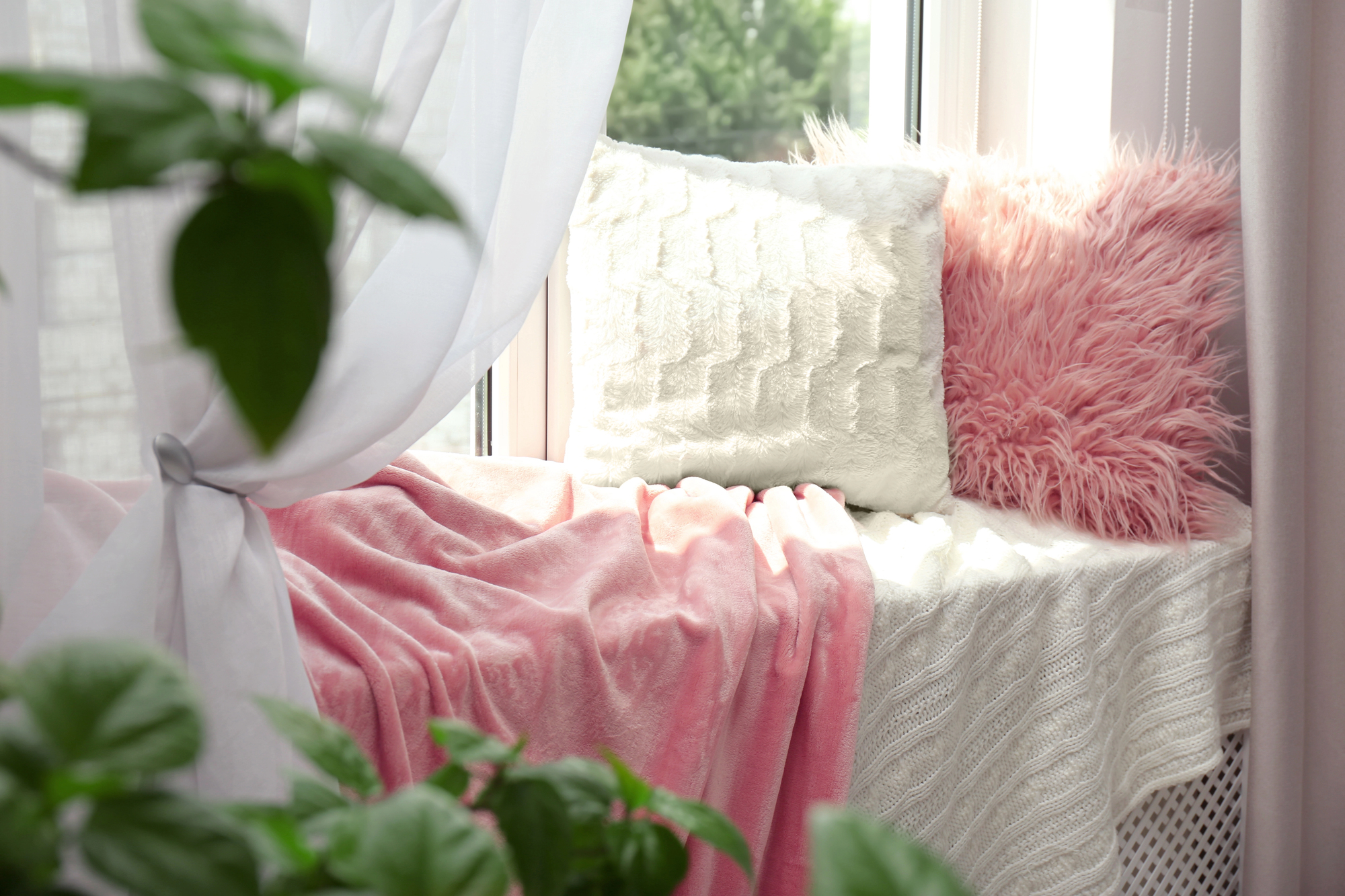
But what if you live in a small apartment, tiny home, shared house, or simply do not have an extra room to dedicate to relaxation? The good news is that you do not need a huge space or expensive furniture to create a peaceful and cozy summer reading nook. With a little creativity, even the smallest corner can become a relaxing retreat where teachers can unwind, recharge, and fall in love with reading again.
Creative Cooking Activities That Build Reading, Math & Life Skills for Kids
Do you want to cook up some magic? Then, invite your kiddos into the kitchen. What begins as a simple task—preparing a meal—quickly transforms into a rich, hands-on learning experience filled with laughter, curiosity, and connection.
Cooking with your kids isn’t just about food; it’s about life skills, confidence-building, and—best of all—sneaking in meaningful educational moments without them even realizing they’re “learning”.
If you’re a homeschool parent or simply a mom looking to make everyday moments more meaningful, the kitchen can become your most powerful teaching tool. From reading recipes to measuring ingredients, from exploring cultural dishes to capturing the beauty of a finished meal through photography, every step is an opportunity to teach. It’s a teachable moment!
Why Cooking Is the Ultimate Learning Lab
Cooking naturally engages multiple senses—sight, smell, touch, taste, and sound. It encourages problem-solving, patience, creativity, and teamwork. It also gives children a sense of responsibility and accomplishment. When kids see that their actions produce something real and enjoyable, their confidence grows.
And the best part? Learning happens organically…deliciously.
No worksheets. No pressure. Just real-life application.
Reading Skills: Following Directions with Purpose
Old family recipe box, with sections for cakes, meats, etc.
One of the easiest ways to incorporate reading into cooking is through recipes. Recipes are functional texts, which means they serve a purpose—and that alone can motivate reluctant readers.
What Kids Learn:
Vocabulary (ingredients and cooking terms)
Sequencing (first, next, then, finally)
Comprehension (understanding instructions)
Skimming and scanning for information
How to Teach It:
Have your child read the recipe out loud before you begin. Ask questions like:
“What do we do first?”
“What ingredients do we need?”
“What does ‘preheat’ mean?”
You can also assign roles:
One child reads the recipe
Another child gathers ingredients
Another child measures
This creates a collaborative learning environment while reinforcing reading skills. (Of course, if you only have one child, then you can assign the above task to that one child or you can do some of them yourself.)
Literature Connections: Bringing Stories to Life
Cooking is a beautiful way to connect literature to real life. Imagine reading a story and then making a dish inspired by the story or planning a meal inspired by the country in which the story was written. Suddenly, the story becomes tangible.
Ideas to Try:
After reading a book set in a different country, cook a traditional dish from that region.
Create a “storybook kitchen day” where meals are inspired by favorite characters.
What Kids Learn:
Story comprehension
Cultural awareness
Making connections between text and real life
This approach is especially powerful for elementary and middle school children who thrive on imagination and storytelling.
Grammar in the Kitchen: Language in Action
Grammar might not be the first thing that comes to mind when cooking, but it’s everywhere in the kitchen.
What Kids Learn:
Parts of speech (verbs, nouns, adjectives)
Sentence structure
Following written instructions
How to Teach It:
Use the recipe as your grammar guide:
Verbs: mix, stir, pour, bake
Nouns: flour, bowl, oven
Adjectives: hot, sweet, soft
Ask your child to identify action words or describe the food using descriptive language. You can even have them write their own recipe after cooking—this reinforces grammar, sequencing, and writing skills all at once.
Math Skills: Measuring, Fractions, and Real-Life Problem Solving
Cooking is one of the best real-world applications of math. From measuring ingredients to adjusting serving sizes, math becomes meaningful and necessary.
What Kids Learn:
Fractions (½ cup, ¼ teaspoon)
Measurement conversions
Addition and subtraction
Ratios and proportions
Teachable Moments:
“We need 1 cup, but only have a ½ cup—what do we do?”
“If we double the recipe, how much flour do we need?”
“How many cookies can we make from this batch?”
Let your child handle the measuring cups and spoons. Even if it gets messy, the learning is worth it.
Science in the Kitchen: Experiments You Can Eat
The kitchen is essentially a science lab. Every recipe is a chemical reaction waiting to happen.
What Kids Learn:
States of matter (solid, liquid, gas)
Chemical reactions (baking soda and vinegar)
Heat transfer
Changes in texture and form
Examples:
Watching dough rise teaches your kiddos about yeast and fermentation.
Melting butter shows changes in states of matter.
Baking a cake demonstrates how ingredients react under heat.
Ask questions like:
“What do you think will happen when we put this in the oven?”
“Why do you think the dough is rising?”
Encourage curiosity and experimentation.
Social Studies: Exploring the World Through Food
Food is deeply connected to culture, history, and geography. Cooking meals from different regions opens the door to meaningful social studies lessons.
What Kids Learn:
Cultural traditions
Geography (where foods come from)
History of certain dishes
Appreciation for diversity
Ideas:
Choose a country each week and cook a traditional meal.
Talk about where ingredients come from.
Discuss how climate and geography influence food.
For example, making a dish from Italy can lead to discussions about Mediterranean climate, farming, and traditions.
Art & Photography: Creativity on a Plate
Cooking isn’t just about taste—it’s also about presentation. This is where art and photography come into play. Think about cooking shows such as Worse Cooks in America or Chopped. These shows not only deal with cooking the food, but they also focus on the presentation of the food.
What Kids Learn:
Creativity and design
Color combinations
Composition and visual storytelling
Activities:
Let kids decorate cookies or cupcakes.
Have them plate the food creatively.
Take photos of the finished dish.
You can even turn it into a mini photography lesson:
Teach them about lighting (natural light works best)
Show them how to frame a shot
Let them experiment with angles
This is especially fun for older kids and can even turn into a digital portfolio or social media project.
Life Skills That Go Beyond the Curriculum
While academic subjects are important, cooking also teaches essential life skills that children will carry into adulthood.
Skills Developed:
Responsibility
Time management
Teamwork
Patience
Independence
Meal preparation
When kids learn how to cook, they gain confidence in their ability to take care of themselves and contribute to the family.
Making It Fun (and Not Stressful)
Let’s be honest—cooking with kids can get messy. Flour on the floor, spills on the counter, and maybe even a few burned cookies along the way. But the goal isn’t perfection—it’s connection and learning.
Tips for Success:
Start simple (no complicated recipes at first)
Assign age-appropriate tasks
Embrace the mess
Focus on the process, not just the result
Remember, the memories you’re creating are just as important as the lessons you’re teaching.
Turning Cooking Into a Weekly Learning Routine
If you want to make the most of these teachable moments, consider setting aside a regular “kitchen learning day.”
Sample Weekly Plan:
Monday: Choose a recipe and read it together
Tuesday: Learn about the culture or origin of the dish
Wednesday: Cook the meal
Thursday: Write about the experience
Friday: Take photos and reflect
This creates structure while keeping learning engaging and hands-on.
Encouraging a Love for Learning Through Everyday Moments
The beauty of teaching through cooking is that it doesn’t feel like teaching. It feels like spending time together, creating something meaningful, and enjoying the results. Cooking—another teachable moment!
21 Unique & Creative Gift Ideas for Middle School Teachers
lawandashields131
Middle School Teacher Gift Guide
Whether’s it’s for Teacher Appreciation Week or an End of the school year gift, you want to make sure that you show your favorite middle school teacher some love. And, I know this can be a daunting task. So, you are confused about what to get the middle school teacher in your life, I gotcha!
Why Thoughtful Teacher Appreciation/End of School Gifts Matter
Teacher Appreciation Week is the perfect opportunity to celebrate the educators who pour their energy, creativity, and patience into shaping young minds every single day. Middle school teachers, in particular, deserve something special (Trust me, I know!). We often have to navigate the unique challenges of pre-teens while balancing academics, emotions, and classroom management without losing our cool.
Personalized Gift Ideas Teachers Will Treasure
1. Customized Teacher Tote Bag
A durable tote bag with the teacher’s name or a fun quote is both practical and personal. This is one of my favorite gifts because I am often lugging a lot of paperwork home from school or to school.
2. Personalized Stationery Set
Monogrammed notepads, sticky notes, and pens add a professional yet thoughtful touch. (These are also a great way to make you feel a little more financially secure than you probably are. As we all know, teachers don’t make a lot of money.)
3. Engraved Wooden Nameplate
Perfect for a classroom desk, this gift adds personality and pride to their workspace. (My number one favorite gift.)
4. Custom Classroom Sign
A sign with a meaningful quote or subject-specific phrase adds warmth to any classroom. These can be purchased from places like Etsy or Amazon, or you can have them personally made just for them.
5. Personalized Planner
Middle school teachers juggle multiple classes—help them stay organized in style. (I confess. I am a planner junkie. And, you can check out mine on Amazon.)
Self-Care & Relaxation Gifts for Hardworking Teachers
6. Spa Gift Basket
Include bath salts, candles, lotion, and relaxing teas for a well-deserved break.
teacher gift idea candle from Homeworx
7. Aromatherapy Diffuser
Helps create a calming environment after a long school day.
8. Cozy Blanket
Perfect for relaxing at home after grading papers or for a cozy evening reading or watching television.
9. “Teacher Survival Kit”
Fill a box with snacks, coffee, stress balls, and motivational notes. And, we all need some motivation.
10. Massage or Spa Gift Card
Teaching is a stressful job, and middle school is especially stressful. Give the gift of relaxation and stress relief.
Practical Gifts Teachers Will Actually Use
11. High-Quality Pens & Markers
Teachers love good supplies—they use them daily.
12. Portable Phone Charger
I’ll be honest, this was not something I would have thought of. But, it is a great gift idea. And, a portable phone charge is a lifesaver during busy school days.
13. Classroom Supply Gift Box
Stock it with essentials like tissues, dry erase markers, and sticky notes.
Creative & Fun Gift Ideas That Stand Out
14. Memory Jar
Fill with notes of appreciation from students and parents. And, my favorite idea is to add students’ favorite memories from the school year.
Food & Treat-Based Gifts Teachers Love
15. Gourmet Snack Basket
Teaching can be draining, and we often neglect to eat. So….food…gourmet food…a easy yes. Fill this snack basket with sweet and savory treats.
16. Coffee Lover’s Gift Set
We need energy, and the drug of choice…coffee. Coffee, mugs, and flavored syrups make a great combo for any coffee drinking teacher.
17. Lunch Gift Card
Lunch gift cards are a great go too. Find out your teacher’s favorite restaurant and gift him/her a gift card to that restaurant.
18. Candy Jar with a Clever Label
Example: “Thanks for making learning SWEET!” Throw on a ribbon and a bow to jazz these up.
Tech-Savvy Gifts for Modern Classrooms
19. Bluetooth Speaker
Great for classroom activities or background music. This is a simple but great tech gift.
20. Digital Gift Card
Amazon, Target, or school supply stores are always appreciated.
Meaningful Group Gifts from the Class
21. Classroom Experience Gift
Pool resources to give a larger gift like a chair upgrade, mini fridge, or flexible seating item.
How to Choose the Perfect Gift for a Middle School Teacher
When selecting a gift, consider:
Personality: Are they humorous, calm, energetic?
Subject area: Math teachers vs. English teachers may appreciate different items
Practicality: Will they use it regularly?
Sentiment: Does it show genuine appreciation?
A thoughtful note paired with even a simple gift can make a lasting impression.
Teacher Appreciation Week Gift Tips
Add a handwritten note whenever possible
Involve students in the gift process
Keep gifts appropriate and school-friendly
Focus on meaning over cost
Celebrate Teachers in a Meaningful Way
Middle school teachers play a vital role in shaping students during some of their most formative years. Choosing the right Teacher Appreciation Week gift doesn’t have to be stressful—with a little creativity and intention, you can give something that truly makes them feel valued.
Whether it’s a personalized keepsake, a relaxing self-care package, or a simple handwritten note, the key is to show gratitude in a way that feels genuine to your favorite middle school teacher.
Videos to Watch:
13 Simple Ways to Prevent Summer Learning Loss
lawandashields131
It’s a time for sunshine, relaxation, and a well-deserved break from the structure of the school year for your kiddos. And, if your kids are like mine, they are looking forward to sleeping in, playing outside, and enjoying a slower pace of life. However, as an educator and a parent, I often carry a quiet concern in the back of my mind (Like any parent): Will my child lose important skills over the summer?
If you’ve already read about summer learning loss—sometimes called the “summer slide”—you understand how academic skills, especially in reading and math, can decline when they’re not practiced consistently. But, how do you keep your kids learning during the summer while not ruining their break? Don’t stress. There are ways to prevent summer learning loss that doesn’t require turning your home into a classroom or sacrificing the joy of summer.
In fact, the most effective summer learning strategies are often the simplest—and the most fun…for both you and your children.
14 Creative Outdoor Reading Nook Ideas Your Kids will Love!
lawandashields131
There’s something almost magical about taking a book outside.
The same child who squirms in a chair indoors will suddenly stretch out on a blanket, flip pages with curiosity, and linger a little longer in a story when the sun is warm and the breeze is gentle. I know I’m guilty of the same behavior. There’s just something about sunshine, lemonade, and a good book.
So, if you’ve ever struggled to keep students—or your own children—engaged in reading, the solution might not be a new curriculum… it might simply be a change of environment for both you and them.
Outdoor reading nooks are a fun way to boost your kiddos’ focus, creativity, and engagement whether you are teaching in a traditional classroom, or you are homeschooling.
When you combine fresh air, natural light, and flexible seating with meaningful reading time, something magical happens. Reading stops feeling like a task and starts feeling like an experience.
Now, let’s check out 14 creative outdoor reading nook ideasyour kids will love. These that are easy to set up, budget-friendly, and adaptable for different learning styles. Whether you’re a homeschool parent, a classroom teacher, or simply someone who wants to inspire a love of reading, these ideas will help you turn ordinary outdoor spaces into irresistible reading havens.
When Misbehavior Is a Cry for Connection: Understanding the Students Who Need Love the Most
lawandashields131
In today’s classrooms, we are facing more than academic gaps—we are navigating emotional and relational gaps as well. One of the most misunderstood truths in education is this: students who want and need love the most often show it in the most challenging ways.
Instead of raising their hands, they raise disruptions.
Instead of asking for help, they test limits.
Instead of seeking connection appropriately, they push adults away.
This is not new—but it is more visible than ever.
If you’re a teacher feeling overwhelmed by constant misbehavior in your classroom, this perspective shift could transform not only your classroom management but also your impact as an educator.
29 Summer Bucket List Ideas for Tired Teachers this Summer
lawandashields131
Relax, Recharge, and Rediscover Joy This Summer
After a long school year filled with early mornings, lesson planning, grading, meetings, and classroom management, summer finally arrives like a deep breath you didn’t realize you needed. For teachers, this season isn’t just a break—it’s a necessary time for rest, renewal, and rediscovery.
But here’s the truth: without a little intention, summer can slip away quickly. One minute you’re celebrating the last day of school, and the next, you’re seeing back-to-school ads in stores. That’s why creating a summer bucket list is such a powerful way to slow down, stay present, and truly enjoy your time off.
This list of 29 fun and creative summer bucket list ideas for teachers is designed to help you do just that. It’s filled with simple pleasures, meaningful experiences, and light adventures that bring joy without adding stress. Whether you want to relax, explore, create, or reconnect—with yourself or others—you’ll find something here for you.
Why Every Teacher Needs a Summer Bucket List
Teaching is more than a job—it’s emotional, mental, and often physical work. You pour into your students every single day, often putting your own needs on the back burner. Summer is your opportunity to shift that focus.
A summer bucket list gives you structure without pressure. It reminds you to:
Make time for yourself without guilt
Try new things outside of your routine
Balance productivity with true rest
Create meaningful memories
Return to the classroom refreshed and inspired
Think of it as a gentle guide—not a checklist you have to complete, but a collection of possibilities waiting for you to enjoy.
Rest, Relaxation, and Self-Care
relaxing teacher practicing self-care
The first part of your summer should feel like a release…a letting go of the school year. Your body and mind need time to recover from the demands of the school year, so don’t rush into productivity. Give yourself permission to simply be.
🛌Sleep in without setting an alarm. Let your body wake up naturally.
☕Enjoy slow mornings where you sip your coffee without checking the clock. These quiet moments are often the most healing.
🌿Take a day—or several—where you intentionally do nothing. No errands, no responsibilities, no pressure. Just rest.
🛀Pair that with a long bubble bath, calming music, or even an afternoon nap, and you’ll start to feel the stress melt away.
📖Consider starting a gratitude journal during the summer. It doesn’t have to be complicated. Each day, write down three things you’re thankful for. This simple habit can shift your mindset and help you stay grounded in joy.
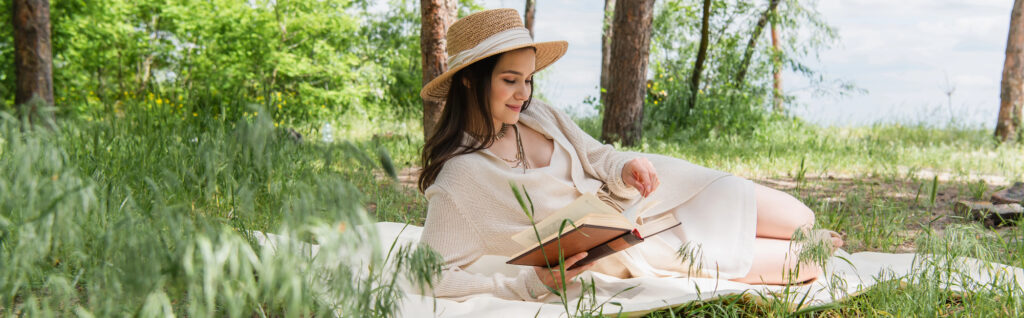
woman reading in nature
🙆♀️You might also explore gentle yoga, meditation, or deep breathing exercises. Even five to ten minutes a day can make a difference in how you feel mentally and emotionally.
📱This one may be hard for some of us. And, I’m definitely guilty. Do a digital detox. Spend a full day—or even a weekend—offline. No emails, no scrolling, no notifications. Just real life happening in real time.
Getting Outside and Enjoying Nature
Woman walking in nature
🪺After spending so much time indoors during the school year, summer is the perfect opportunity to reconnect with the outdoors. Fresh air and sunshine have a way of restoring energy and lifting your mood.
🏖️Visit a nearby lake, river, or beach. You don’t need a big vacation to enjoy the water—sometimes a simple day trip is enough to feel refreshed. Bring a book, a snack, and let yourself unwind by the water.
🚶♂️➡️Take a walk through a local park or nature trail. Notice the sounds, the colors, and the feeling of being present in the moment. 🥾If you’re feeling adventurous, try hiking or even kayaking for a new experience.
🧺Plan a picnic, either by yourself or with loved ones. There’s something special about eating outside, surrounded by nature. It turns an ordinary meal into a memory.
🌅Make time to watch the sunrise or sunset. These quiet, beautiful moments remind you to slow down and appreciate the world around you.
⭐You could even try something simple like walking barefoot in the grass or lying under the stars at night.
These small experiences often bring the greatest sense of peace.
Savoring Food, Fun, and Simple Joys
Summer is also about enjoying the little things that make life sweet. Food, laughter, and shared moments can turn an ordinary day into something special.
🍳Try a new recipe each week. It could be something light and refreshing, like a summer salad, or something fun like homemade popsicles. Cooking without the pressure of a busy schedule can actually be enjoyable.
🫕Host a backyard barbecue, a casual get-together with friends, or an adult tea party🫖 (my fav!). It doesn’t have to be fancy—just good food, good company, and a relaxed atmosphere.
🍷🍽️Explore local restaurants you’ve never tried before. Summer is a great time to step out of your routine and discover new favorite spots.
🍦Have an “ice cream day” where you treat yourself just because. My favorite way to do this is to add my ice cream on top of my warm apple pie.
🍳Start your morning with breakfast outside, enjoying the quiet before the day begins.
🍝You might even create themed nights at home—like “Movie Night” or “Pasta Night”.
Exploring Creativity and Personal Growth
Once you’ve had time to rest, summer becomes a great opportunity to reconnect with your creative side.
🎨Start a new hobby you’ve been curious about. Whether it’s painting, sewing, gardening, or photography, give yourself permission to be a beginner. The goal isn’t perfection—it’s enjoyment.
🎯Consider creating a vision board for the upcoming school year or for your personal life. It’s a fun and visual way to define your goals for the year, to set intentions and to stay inspired.
📒Journaling is another powerful tool. Write about your experiences, your thoughts, or even your goals. It can be as structured or as free-flowing as you like. (Be sure to check out my other posts on journaling)
✏️If you enjoy writing, try creating a blog post, short story, or even social media content. Summer is a great time to explore ideas without deadlines.
📔You could also organize your favorite memories into a scrapbook or photo album. Reflecting on happy moments can bring a sense of gratitude and joy…and help you stop thinking about the school year.
Making Memories and Trying New Experiences
Summer is the perfect time to step outside your usual routine and create lasting memories. These experiences don’t have to be big or expensive—they just need to be meaningful.
🚶♀️➡️Take a day trip to a nearby town or city you’ve never explored. Walk around, visit local shops, and enjoy the feeling of being somewhere new.
🖼️Visit a museum, historical site, or local festival. These outings can be both fun and enriching, giving you new perspectives and ideas.
📸Document your summer by taking pictures or writing about your experiences. These memories will be something you can look back on and cherish.
📝 Write a letter to your future self or set a few simple intentions. These don’t have to be work-related—they can focus on maintaining balance…staying grounded…focusing on you instead of school.
Slowing Down as the School Year Ends
The school year is over, and you deserve some time to yourself. You deserve to focus on the things that bring you joy. As a teacher, you spend so much of your life giving—to your students, your school, and your community. Summer is your time to receive.
This bucket list isn’t about doing everything perfectly or staying busy. It’s about creating moments that bring you joy, peace, and fulfillment. It’s about remembering who you are outside of the classroom. Every moment of rest, every laugh, every new experience is helping you recharge. So, give yourself permission to enjoy every bit of your summer.
45 of the Most Creative Summer Journal Writing Ideas for Southern Women
lawandashields131
I am a southern girl through and through. And, as summer approaches, it’s time to start thinking about being outdoors and doing one of the things that I love most…journaling. There’s something special about summer in the South. Southern summer days stretch longer, and life seems to slow down just enough for us to breathe, reflect, and reconnect with ourselves. Whether it’s sipping sweet tea or lemonade on the porch, listening to crickets at sunset, or tending to a backyard garden, summer offers the perfect backdrop for journaling.
Journaling is a perfect way for you to capture your thoughts, memories, and dreams this summer while enjoying the season. It doesn’t have to be complicated or time-consuming. In fact, the best journaling is simple, honest, and filled with your unique voice.
So, here are 45 fun, creative summer journal writing ideas that will inspire reflection, spark joy, and help you create lasting memories—all while embracing the beauty of Southern living.
How to Build a Southern-Inspired Summer Reading Nook for Women Over 40 Who Need a Break
lawandashields131
Porch Swings & Paperback Books
There comes a moment—usually sometime between answering everyone else’s needs and forgetting your own—when your soul quietly whispers, “I need a break.” Not a rushed vacation. Not a weekend full of obligations disguised as rest. ( Hey, I’m definitely guilty of the “fake weekend rest”) But true rest. Rest where you are away from the kiddos, the hubby, pets, and all responsibility.
For many of us—those balancing careers, caregiving, homes, and expectations—rest doesn’t come easily. It has to be created. And, protected!
As a Southern Belle, those lazy summer evenings can be just the thing. And, a Southern-inspired summer reading nook can be a true blessing.
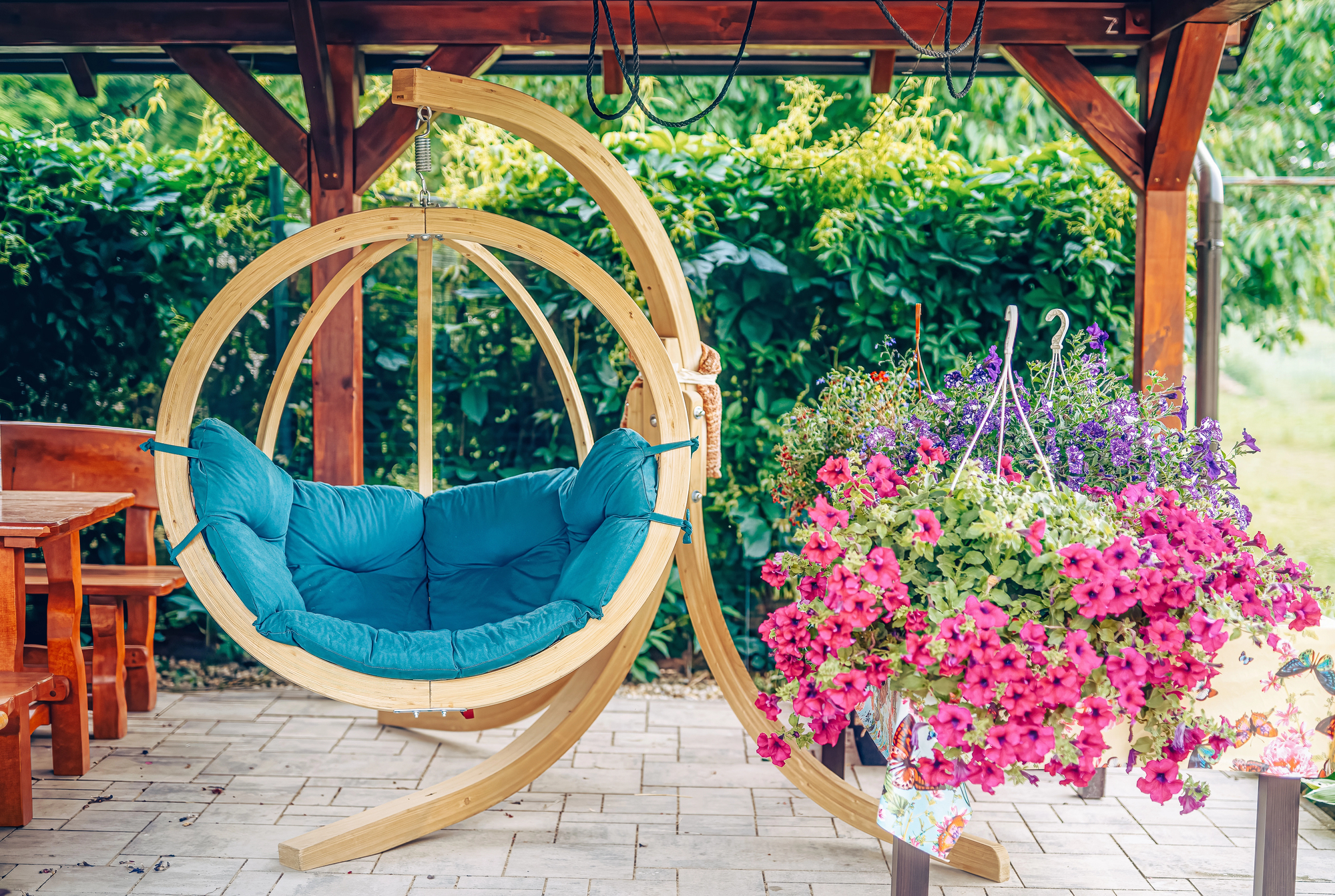
I’m talking a gently swaying porch swing, the hum of crickets in the background, a tall glass of iced tea or homemade lemonade sweating in the heat, and a paperback novel resting softly in your hands. No notifications. No deadlines. (No school…if you are a teacher like me.) Just you, your thoughts, and a story that carries you somewhere slower… softer.
This isn’t just about decorating a cute corner. It’s about reclaiming your peace. Let’s build your sweet, southern, summer escape.
Nature-inspired, Spring Decoration for Your Homeschool Classroom Your Kids will Love!
lawandashields131
Bringing the Outdoors Into Your Spring Lessons
Spring has a way of waking everything up—including our homeschool routines. The days grow longer, the air feels lighter, and suddenly the idea of sitting under those harsh lights with worksheets feels…boring…and, wrong…just wrong! This is the season when learning wants to breathe.
Nature-inspired homeschool decorating isn’t about buying new supplies or blowing the budget on something else frivolous. It’s about using the natural world as both your backdrop and your curriculum, creating a learning environment that reflects renewal, curiosity, and calm.
So, how do you bring nature into your homeschool classroom? One way is through its décor. Home décor that is intentional…as well as affordable can help support spring-themed learning and outdoor education at home—without overwhelming you or cluttering your space.
Why Nature-Inspired Decorating Works for Homeschooling
Long before textbooks and screens, children learned through observation—watching seasons change, animals migrate, plants grow, and weather shift. And, don’t get me started on planting and growing crops. (Hey, I’m a Mississippi county girl. I know about planting and growing. 🙋🏾♀️ )When you design your homeschool environment around natural elements, you tap into that ancient learning instinct.
Nature-based learning environments reduce stress, improve focus, and increase creativity in children. But, even without formal studies, most homeschool parents can feel it instinctively: children are calmer and more engaged when their surroundings feel open, organic, and connected to the world outside.
Nature-inspired homeschool decorating works because it:
Encourages curiosity and observation
Supports multiple learning styles
Creates a calm, focused atmosphere
Reinforces spring science, literacy, and art lessons
Makes learning feel seasonal and alive
Instead of fighting spring restlessness, you design your space to flow with it.
Start With a Spring Reset: Clearing Space for New Growth
Before adding anything new, spring invites us to let go. Nature doesn’t pile new growth on top of decay—it clears space first.
Take time to gently reset your homeschool area. This doesn’t require a full overhaul. Even small changes can signal a seasonal shift.
Remove winter-heavy visuals like dark colors, snow imagery, or overcrowded bulletin boards. Swap them for lighter tones, open wall space, and breathing room. Rotate books to highlight nature, animals, weather, gardening, or seasonal poetry. (Be sure to check out my blog post on my favorite spring-themed books!)
Decluttering creates visual calm, which makes any nature-inspired elements you add feel intentional rather than chaotic.
Think of this reset as preparing soil before planting. The learning that follows will take root more easily.
Bringing Natural Materials Into Your Homeschool Space
One of the simplest ways to embrace nature homeschool ideas is by incorporating real, tactile materials. These items ground learning in the physical world and invite hands-on exploration.
Wood, stone, cotton, linen, and wicker all bring warmth without distraction. A wooden tray for supplies, a woven basket for books, or a stone collection from your backyard instantly transforms a shelf into a learning station.
Natural materials also age well. They don’t feel disposable or trendy, which makes them perfect for homeschool families who value sustainability and intentional living.
Children instinctively interact differently with natural objects. A basket of pinecones becomes a math manipulative, a writing prompt, and a science specimen—all without instruction.
Creating a Living Science Wall for Spring
Spring science doesn’t need to be confined to notebooks. A nature-inspired homeschool wall can evolve throughout the season, turning observation into an ongoing project.
Designate one wall or bulletin board as your Spring Discovery Wall. Instead of pre-printed posters, allow it to grow organically with your lessons.
You might include pressed flowers labeled by species, leaf rubbings, weather charts, bird sketches, or handwritten questions your children ask during outdoor walks. Add photos from nature outings or simple drawings that document changes over time.
This kind of wall becomes a visual timeline of learning. It shows children that knowledge isn’t static—it grows, just like spring itself.
Nature-Themed Reading Nooks That Invite Curiosity
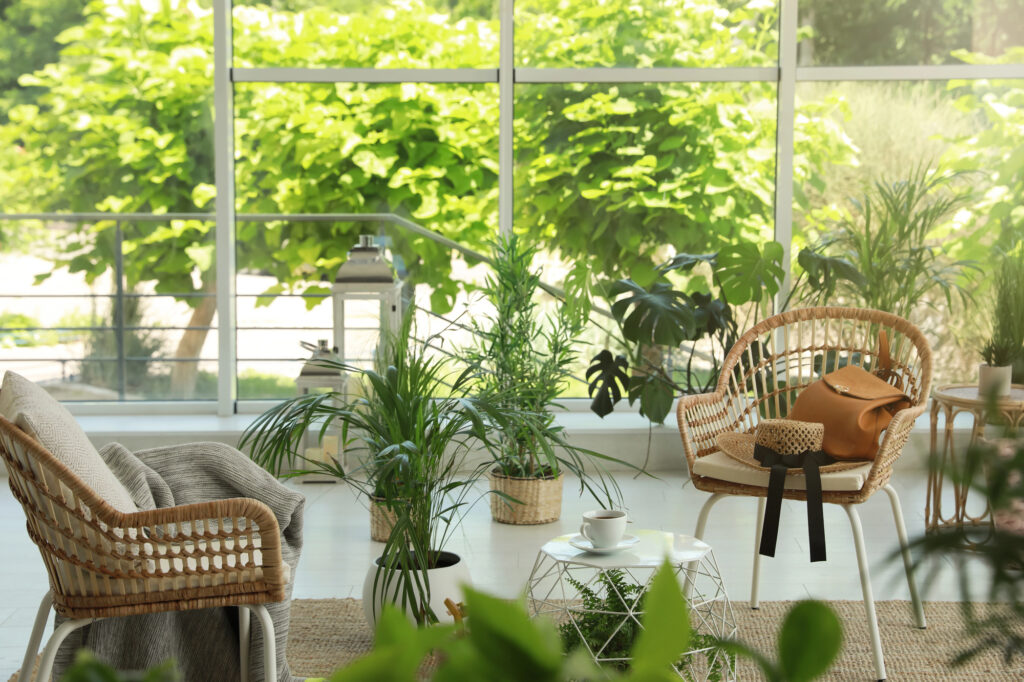
plants in a nature-inspired reading nook
Spring is the perfect season to refresh your reading space. A nature-inspired reading nook encourages quiet reflection while still keeping students connected to the outdoors.
Use soft, neutral colors paired with botanical prints or animal illustrations. Add floor cushions, a small rug with leaf or floral motifs, and a basket of spring-themed books. Position the nook near a window if possible, allowing natural light to become part of the experience.
Books about plants, ecosystems, animals, and outdoor adventures feel more immersive when read in a space that reflects their themes. This subtle alignment strengthens comprehension and emotional connection to the material.
Reading in spring doesn’t have to stay indoors, either. Consider rotating your reading nook outside on warmer days—proof that nature-inspired decorating isn’t limited by walls.
Spring-Themed Learning Displays That Teach Without Overstimulating
Decorating for learning works best when visuals support instruction rather than overwhelm it. Nature-inspired displays are naturally calming, making them ideal for spring-themed learning.
Instead of bright borders and busy charts, choose muted greens, soft blues, and earth tones. Hand-drawn diagrams of plant life cycles, watercolor maps, or simple labeled illustrations feel more organic and less distracting.
For younger learners, visual cues like butterflies for sequencing, flowers for parts-of-speech practice, or weather icons for daily journaling keep lessons engaging without relying on cartoon imagery.
These displays quietly reinforce concepts throughout the day, turning your homeschool walls into gentle teachers.
Using Plants as Living Curriculum
Houseplants are one of the most powerful—and underrated—tools for outdoor education at home. And, one of my favorites! They aren’t just décor. They are living science experiments.
Even a few low-maintenance plants can anchor lessons in biology, responsibility, and observation. Children can track growth, measure height, document leaf changes, and learn about sunlight and water needs.
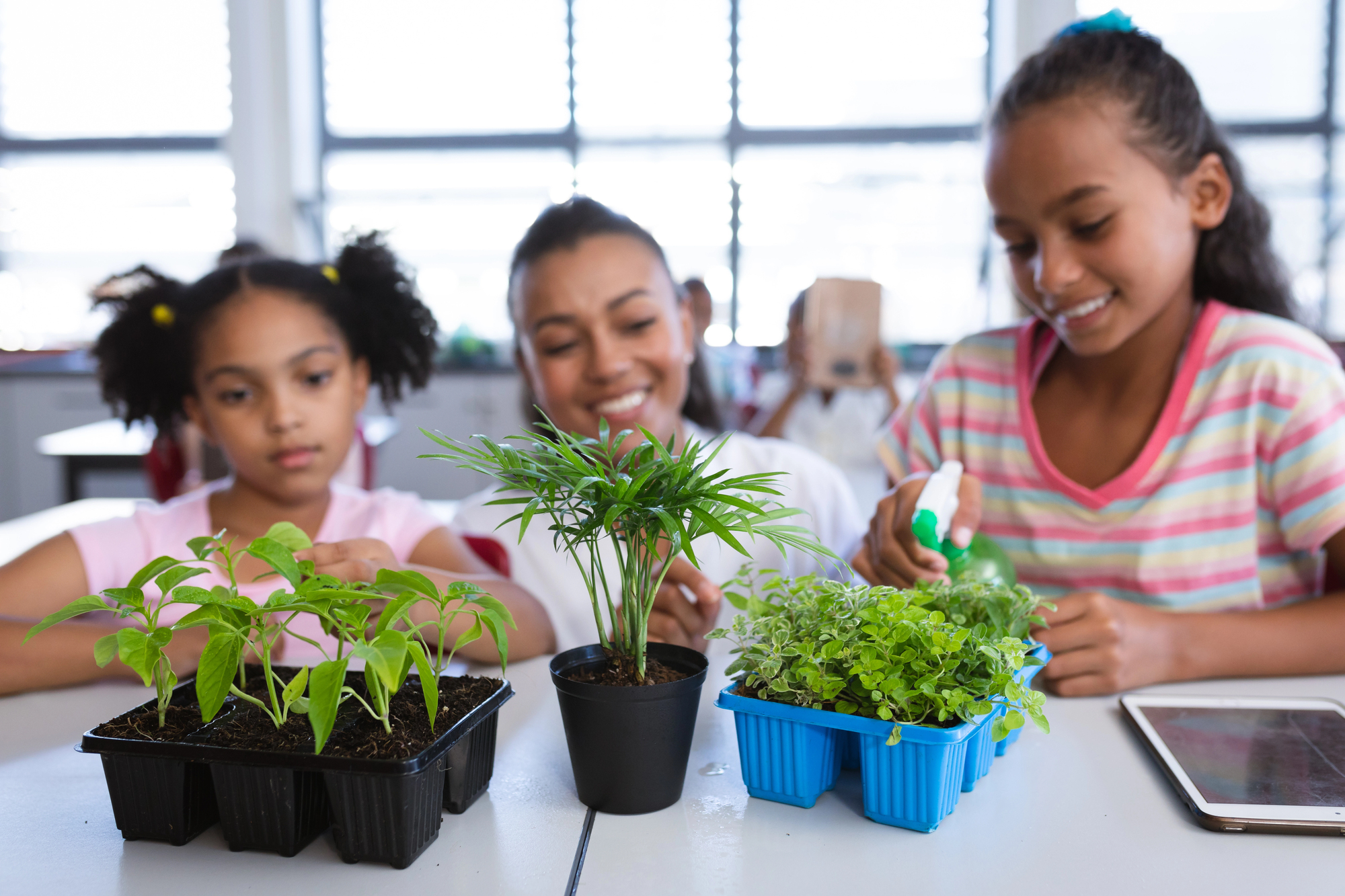
Herbs work especially well for homeschool environments. They connect science with cooking, health, and sensory learning. (Another shameless plug: Be sure to check out my blog post on How to Teach Your Students to Cook on a Budget) Children remember lessons more deeply when they can smell, touch, and taste what they’re studying.
Plants also subtly teach patience. Growth doesn’t happen on a worksheet timeline—and that’s a lesson worth learning.
Nature-Inspired Art That Doubles as Instruction
Spring art projects don’t need to be separate from academics. When displayed intentionally, student artwork becomes part of your homeschool décor and your curriculum.
Children feel pride when their work becomes part of the environment. That sense of ownership increases motivation and engagement across subjects.
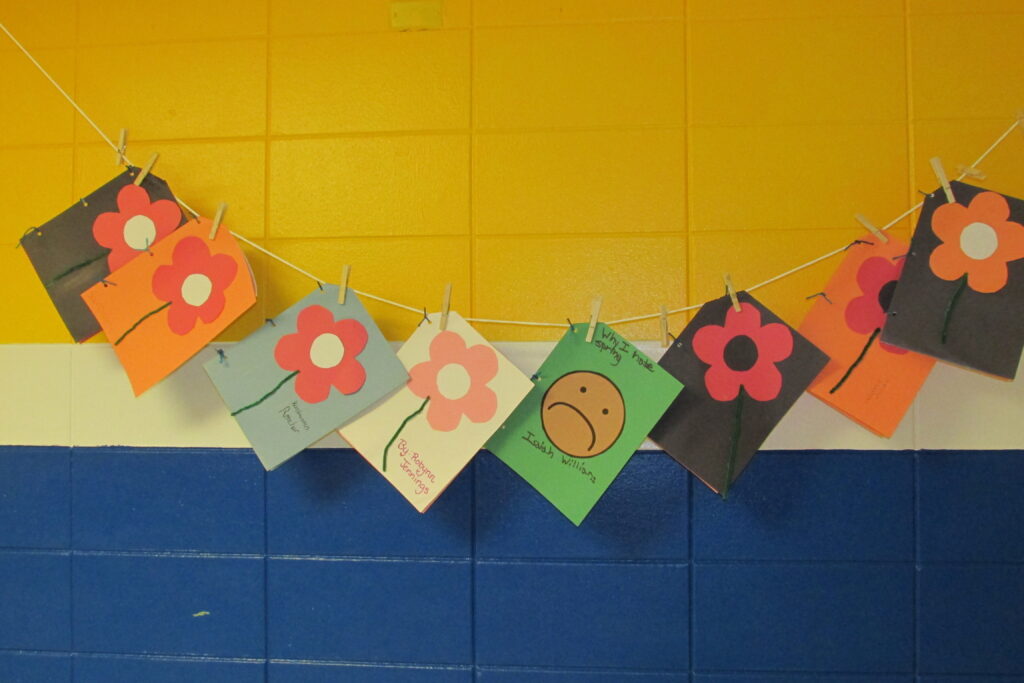
spring photo journals of nature that can be used for decoration.
Incorporating Outdoor Learning Into Your Indoor Space
Nature-inspired homeschool decorating doesn’t mean abandoning indoor learning. It means creating continuity between inside and outside.
Use maps, globes, and weather charts to connect outdoor observations to broader concepts. Display tools like magnifying glasses, binoculars, or field guides where children can easily access them.
When outdoor education at home is visibly valued, children begin to see nature as a legitimate source of knowledge—not just a recess activity.
This mindset shift is powerful. It teaches children that learning doesn’t end at the desk.
Seasonal Routines That Match Your Environment
Decorating works best when it aligns with how you use your space. Spring invites flexibility, movement, and exploration.
Pair your nature-inspired décor with routines that honor the season. Shorter indoor lessons followed by outdoor exploration feel natural when your space reflects spring energy. Morning journaling near a window, science walks after lunch, or afternoon read-alouds outside reinforce the connection.
When décor, routine, and curriculum work together, homeschool days feel less forced and more fluid.
Let Spring Teach You, Too
Nature-inspired homeschool decorating is as much about mindset as it is about materials. It reminds us that learning is seasonal, cyclical, and deeply human.
When you bring the outdoors into your spring lessons, you give children permission to slow down, notice details, and engage with the world as it is—not just as it appears on a page.
And when your homeschool classroom reflects that truth, learning flourishes naturally.